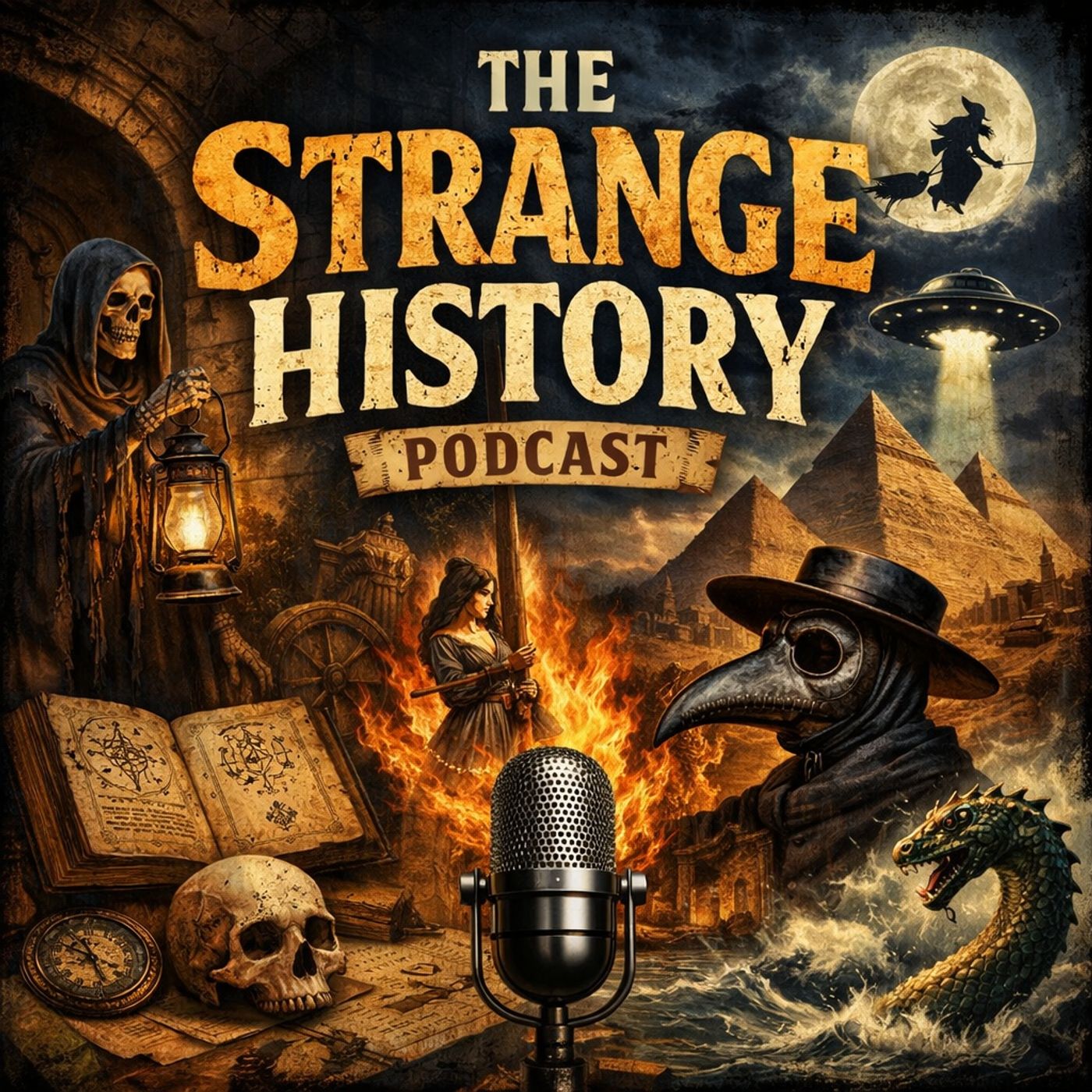
Can You Be Scared to Death? The Science of Fear That Can Actually Kill You | Why We Seek It—and When It Goes Too Far
The Story
Can fear actually kill you? In this episode of The Strange History Podcast, we explore the science of fear, why humans are drawn to scary experiences, and the real cases where extreme fear has led to death. Learn how the brain processes fear through the amygdala, adrenaline, and dopamine, and why “recreational fear” from horror movies, haunted houses, and thrill rides can feel exciting instead of dangerous. We also dive into the real medical and historical phenomena behind fear-related deaths, including studies by Walter Cannon on “voodoo death,” modern cases of stress-induced cardiomyopathy, and reports of fatal cardiac events triggered by fear. This episode also explores true stories, including a reported death during a screening of The Conjuring 2 and the strange case of Alex Mitchell, showing how extreme emotional responses—whether fear, stress, or even laughter—can push the human body beyond its limits. Blending neuroscience, psychology, and real-life events, this episode reveals the fascinating and unsettling truth about fear—why we crave it, how it affects the body, and when it can become dangerous.Become a supporter of this podcast: https://www.spreaker.com/podcast/the-strange-history-podcast--5773362/support.
🎧 The Strange History Podcast Love bizarre true stories, forgotten scandals, and history’s most unhinged moments?
Submit your ideas for The Strange History Podcast
Follow The Strange History Podcast wherever you listen and never miss an episode. 🔗 Listen & Subscribe:
Apple Podcasts
Spotify
iHeartRadio
Audible
New episodes regularly. History gets weird here.
Speaker 1: Dear listener, tonight, we are stepping into something that feels a little too close to home, because instead of exploring something out there in the world, a haunted road, a cave deep underground, or a strange historical mystery, we are exploring something inside you, something ancient, automatic, and incredibly powerful. Because the question we are asking is not just why we love being scared, but how something designed to keep us alive can, under the right conditions, actually do the opposite, Because fear, at its core is not entertainment, it is survival.
Speaker 1: It is one of the oldest systems in the human brain, a built in alarm system designed to detect danger and respond instantly, activating the amygdala, triggering the release of adrenaline, increasing heart rate, sharpening focus, and preparing the body to fight, flee, or freeze, all within fractions of a second, which is incredible useful if you are being chased by something, and slightly less necessary when you are sitting on your couch watching a horror movie and questioning your decision to turn the lights off.
Speaker 1: And yet we seek it out. We build haunted houses, we watch horror films, we tell ghost stories. We ride roller coasters that simulate danger without actually delivering it, And somehow we have collectively decided that activating our survival instincts for fun is a perfectly reasonable weekend activity, which raises a very fair question, when did we decide that fear was something we wanted? More of The answer lies in the strange chemistry of the brain, because when you experience fear in a controlled environment, your brain releases not only adrenaline but also dopamine, creating a combination of stress and reward that feels intense, engaging, and in a strange way, enjoyable.
Speaker 1: Is how you end up gripping the edge of your seat, heart racing, fully aware that nothing is actually going to happen to you, and still completely invested in the experience. This is what scientists refer to as recreational fear, a situation where the brain is allowed to simulate danger without real consequences, creating a safe version of an unsafe experience, which is essentially emotional multitasking. And if your brain had a setting's menu, this would be labeled something like simulate panic, but make it fun.
Speaker 1: But here's where things begin to shift, because not all fear stays recreational, because the same system that allows you to enjoy a scary movie, is also capable of going much further, much faster, and much harder than you might expect. And yes, dear listener, there are real cases where fear has gone too far. Not metaphorically, not dramatically, but physically, Because while people don't usually dropped dead from being startled in the way horror movies suggest, extreme fear can trigger very real physiological reactions, and in some cases, those reactions can be fatal.
Speaker 1: In the early twentieth century, physiologist Walter Cannon studied what he called voodoo death, documenting cases where individuals who believed they had been cursed became so overwhelmed by fear that they died shortly afterward, a phenomenon reported across multiple cultures, and one that suggested something deeply unsettling that belief alone, when combined with extreme fear, could trigger a fatal cascade within the body, essentially overwhelming the system designed to protect it. And if that sounds distant or historical or easy to separate from modern life, it isn't, because in twenty sixteen, headlines out of India reported a man collapsing during a screening of the Conjuring two, with reports stating that he experienced a fatal cardiac event during the film, an incident that quickly spread across news outlets not because it was common, but because it was possible, and because it forced people to confront the idea that fear, even when simulated, can still push the body further than expected, which is not exactly what you want to think about halfway through a horror movie.
Speaker 1: And then there are the quieter cases, the ones that don't make headlines, the medically documented incidents where a sudden shock, a loud noise, or an unexpected scare triggers a fatal arrhythmia, particularly in individuals with underlying heart conditions, where the startle response that instant spike of adrenaline causes the heart to lose rhythm in a way that it cannot recover from, which is rare but real and also explains why being startled in a silent house at night feels like a full body event.
Speaker 1: There is also a condition known as stress induced cardiomyopathy, sometimes referred to as broken heart syndrome, where extreme emotional shock, including fear, can temporarily weaken the heart, mimicking a heart attack, and in rare cases leading to death, and this has been observed in real world events, including natural disasters, where individuals who were not physically injured still experienced severe cardiac symptoms purely from the intensity of the moment, reinforcing the idea that the body does not always distinguish between physical danger and emotional perception.
Speaker 1: And then there are the cases that feel harder to explain. Accounts documented by anthropologists describe individuals subjected to ritual curses, such as bone pointing practices in indigenous Australian communities, where the belief in impending death was so strong that individuals withdrew completely stopped eating and died within days, not from injury, not from illness in the traditional sense, but from the overwhelming physiological impact of fear and belief combined, which is the kind of story that sits uncomfortably between science and something we don't fully understand.
Speaker 1: And just when you think the human body has reached its limit, history offers one more strange reminder because in nineteen seventy five, a man named Alex Mitchell reportedly died after laughing continuously while watching a comedy program. And while this was not fear, it highlights something critical extreme emotional states, whether fear, stress, or even joy, all activate similar systems in the body, and in this case, prolonged stress on the cardiovascular system is believed to have contributed to heart failure, which is a very unexpected reminder that the human body, while incredibly resilient, does in fact have boundaries, even when you're enjoying your life self.
Speaker 1: Now, before you cancel your plans and decide to avoid anything remotely scary for the rest of your life, it's important to bring this back to reality because for most people, fear experienced in controlled environments is not dangerous. It is stimulating, engaging, and even beneficial, helping build resilience, sharpen focus, and create memorable experiences, which is why people continue to seek it out despite everything we've just discussed. And speaking of seeking things out, let's take a moment to address a problem you didn't know you had.
Speaker 2: Are you tired of your fear being unpredictable, inconsistent, and occasionally a little too real? Do you wish there was a way to control exactly how scared you feel at any given moment, then you may be ready for fear dial, the only completely fictional device that lets you adjust your fear levels from mild unease to why did I do this to myself? All from the comfort of your own home. Fear dial exists because sometime times, the only thing more confusing than fear is how much you're enjoying it.
Speaker 1: But here's the truth, dear listener, Fear is not just something we experience. It is something that shapes us. It influences our decisions, our reactions, and even our physical state. And while most of the time it stays within safe boundaries, there are moments where it pushes further, where the line between perception and reality begins to blur, and where the body responds not to what is happening, but to what it believes is happening. And perhaps that is the most unsettling part of all, because your brain does not always know the difference.
Speaker 1: If something feels real enough, your body may treat it as real, Dear listener, As we step back from this strange relationship we have with fear, what becomes clear is that it is not just a reaction. It is an experience, one that we seek out, explore, and sometimes underestimate. Because while fear can be thrilling, engaging, and even enjoyable, it is also powerful, and like anything powerful, it does not always stay within the boundaries we expect. So the next time you find yourself watching something that makes your heart race or stepping into a situation that you know will scare you, take a moment to notice what your body is doing, because in that moment, your brain is balancing two realities, one where you are safe and one where you are not, And somehow it lets you experience both sleep well, dear listener and tonight.
Speaker 1: If something scares you, just remember your body is always listening, even when it shouldn't be.
Speaker 3: Behind the body had
 Apple Podcasts
 Castbox
 Castro
 Goodpods
 Moon FM
 Overcast
 Pocket Casts
 Podbean
 Podcast Addict
 Podcast Republic
 Spotify