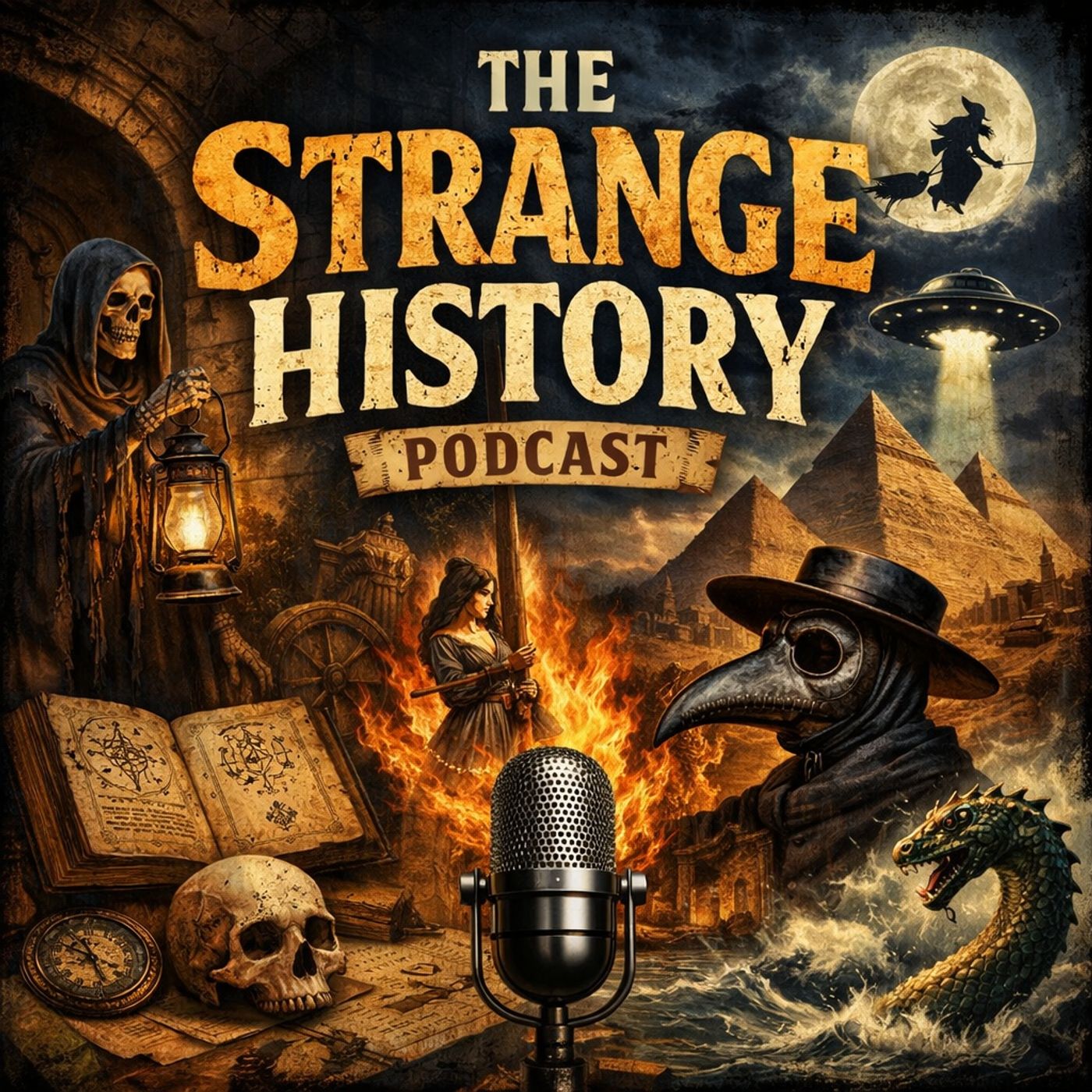
The Wild Hunt — When Medieval Europe Believed the Dead Rode the Sky
The Story
In this episode of The Strange History Podcast, host Amy explores the terrifying folklore of the Wild Hunt — a ghostly procession of dead riders believed to race across the winter sky during late February. Across England, Germany, Scandinavia, and France, February 20 was feared as a night when the boundary between the living and the dead weakened, and spectral hunters led by gods and spirits tore through the air with horns, hooves, and howling winds. Drawing from medieval folklore, regional legends, and historical accounts of strange winter storms, this episode reveals why people believed the Wild Hunt stole livestock, marked homes for misfortune, and carried away those unlucky enough to witness it. Blending dark humor, mythology, medieval belief, and eerie calendar traditions, this episode uncovers why February 20 was treated not as a celebration — but as a night to lock doors, shutter windows, and wait for morning. If you love strange history, ancient folklore, ghost stories, medieval myths, and dark seasonal legends rooted in real belief systems, this episode belongs in your queue. New episodes drop regularly. Follow The Strange History Podcast and keep moving through the calendar — one haunted date at a time.Become a supporter of this podcast: https://www.spreaker.com/podcast/the-strange-history-podcast--5773362/support.
🎧 The Strange History Podcast Love bizarre true stories, forgotten scandals, and history’s most unhinged moments?
Submit your ideas for The Strange History Podcast
Follow The Strange History Podcast wherever you listen and never miss an episode. 🔗 Listen & Subscribe:
Apple Podcasts
Spotify
iHeartRadio
Audible
New episodes regularly. History gets weird here.
Speaker 1: Hello, dear listeners, and welcome back to the Strange History Podcast, where the calendar continues to spiral gently into folklore, fear, and the deeply unsettling realization that medieval people were extremely confident about things we now call absolutely not. Today's date is February twentieth, and this is a night that large parts of Europe treated with genuine dread, not because of war, not because of plague, but because this was believed to be the night the Wild Hunt road, and you were not supposed to look at it.
Speaker 1: Across northern and western Europe, February twentieth fell squarely inside what folklore described as the danger window of winter, the point where the cold had gone on too long, supplies were thin, nerves were frayed, and the boundary between the living and the dead was said to weaken just enough to cause problems. The Wild Hunt was not a single myth. It was a shared panic with regional flavor. In Germanic lands, it was led by Odin, riding through the sky with ghostly warriors and lost souls, hunting across clouds and treetops.
Speaker 1: In England it became Herne the Hunter, a horned figure racing through the night air. In France, it was a howling procession of the damned. In Scandinavia, it was a storm made of people who were no longer supposed to be moving. Different names, same rule. If you heard it, you stayed inside. If you saw it, you didn't talk about it. If it saw you, that was considered a problem. February twentieth appears in multiple regional traditions as a night when the hunt was most active. Farmers were warned not to travel, children were pulled indoors.
Speaker 1: Early fires were banked low, shutters closed, Prayers said quickly and without flourish. This wasn't theatrical superstition. This was practical fear. Because the wild Hunt didn't just passed through. It took things. Folklore says it stole livestock, carried off the sick, claimed travelers, and marked houses for misfortune. Sometimes it took people immediately, Sometimes it followed them home and waited. The most unsettling part of the myth is that the hunt was not considered evil. It was considered inevitable.
Speaker 1: The hunt rode because the world was out of balance, because winter lingered too long, because death had unfinished business, and February twentieth was when that business was most urgent. Medieval chroniclers occasionally referenced strange winter storms where winds sounded like voices, hooves, horns, and shouting. Trees fell without lightning, livestock panicked for no visible reason. Entire villages reported the same night terrors, and much like the dragon skies of February eighteenth, these accounts weren't written as metaphors.
Speaker 1: They were written as explanations. The sky was full of riders, the wind was full of the dead, and winter was not done with us. Yet. What makes this faintly funny in a dark, strange history way is how procedural it all was. People didn't try to stop the hunt. They didn't confront it, they didn't investigate. They closed the door and waited it out, which is honestly the most relatable medieval survival strategy imaginable. Over time, the Wild Hunt was absorbed into legend, then literature, than fantasy, where it became dramatic and heroic.
Speaker 1: But in its original form, it wasn't a story meant to entertain. It was a warning system. February twentieth wasn't cursed. It was crowded. Crowded with things that weren't supposed to be here anymore.
Speaker 2: This episode is brought to you by yay ol Day Shutter and Bolt Company, proudly providing unnecessary but emotionally essential home protection since recently. If you hear hoobs in the sky, horns in the wind, or your dog suddenly refuses to exist outdoors, our reinforced shutters will not stop the wild Hunt, but they will make you feel like you tried the old Shutter and Bolt Company. They can't get in probably.
Speaker 1: And that brings us to February twentieth, the night medieval Europe stayed indoors, held its breath, and hoped the sky finished its business elsewhere. So if the wind sounds wrong tonight, if the air feels crowded, if something unseen seems to rush past your house with purpose, congratulations, you're experiencing folklore correctly. Until next time, stay curious, lock your doors, and remember history didn't invent the wild Hunt because it wanted a story. It invented it because winter needed an explanation.
 Apple Podcasts
 Castbox
 Castro
 Goodpods
 Moon FM
 Overcast
 Pocket Casts
 Podbean
 Podcast Addict
 Podcast Republic
 Spotify